

Description
When contemporary conversations on the “future of work” began a decade ago, most of the technologies that would define that term still resided comfortably in the realm of science fiction, or were only just emerging into public view — self-driving cars, artificial intelligence, and personal deliveries at the push of a button. Today — after a pandemic that prompted many to reexamine their relationship with their jobs, exposed the precarity of work for many more, and accelerated the adoption of technology — all these phenomena have come into their own, to varying degrees. Regulators, employers, and commentators alike struggle to keep pace with what this means for our labor force and for the role work will play in our society in the decades to come. All year we’ve been marking the tenth anniversary of Aspen Institute’s Future of Work Initiative, with an editorial series examining the lessons learned from a decade of “future of work” discourse, with contributions from leaders in academia, business, labor, policy, and philanthropy. As we prepare to conclude the series, please join us on Wednesday, December 17, from 2 to 3:15 p.m. Eastern time, on Zoom, for a discussion with Future of Work Fellows and contributors to explore how, together, we can shape a future of work that works for all Americans.
Opening Remarks

Liba Wenig Rubenstein
Director, Future of Work Initiative, Economic Opportunities Program
Bio
Liba Wenig Rubenstein is the director of the Future of Work Initiative.
Previously, Liba was the founding and lead social impact executive at MySpace, Tumblr, and 21st Century Fox, where she pioneered ways to harness companies’ financial, human, cultural, and technological resources for social, civic, and environmental progress and built bridges between sectors to amplify impact. She has helped found the Civic Alliance, chaired the board of premier youth vote organization the Alliance for Youth Organizing, served as a member of the World Economic Forum’s Global Agenda Council on Sustainable Consumption, and advised nonprofits Pop Culture Collaborative, KW Foundation, Vote.org, Social Impact Fund, CARE, Civic Nation, Why Tuesday?, and Invisible Children. Born and bred in Brooklyn, and a proud product of New York City public schools, Liba graduated from Yale University with distinction in American studies and now resides in Los Angeles with her husband and two young daughters.
Speakers
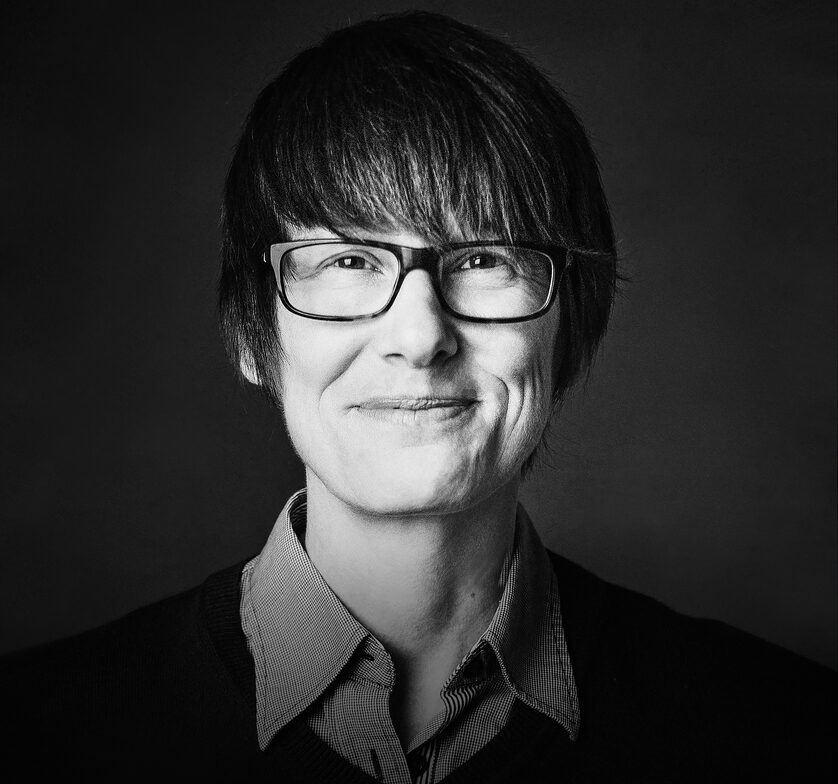
Mary L. Gray
Senior Principal Researcher, Microsoft Research
Bio
Mary Gray is Senior Principal Researcher at Microsoft Research and Faculty Associate at Harvard University’s Berkman Klein Center for Internet and Society. She maintains a faculty position in the Luddy School of Informatics, Computing, and Engineering with affiliations in Anthropology and Gender Studies at Indiana University. Mary, an anthropologist and media scholar by training, focuses on how people’s everyday uses of technologies transform labor, identity, and human rights. Mary earned her PhD in Communication from the University of California at San Diego in 2004, under the direction of Susan Leigh Star. In 2020, Mary was named a MacArthur Fellow for her contributions to anthropology and the study of technology, digital economies, and society.
Mary’s work includes In Your Face: Stories from the Lives of Queer Youth (1999) and Out in the Country: Youth, Media, and Queer Visibility in Rural America (2009), which looked at how young people in rural Southeast Appalachia use media to negotiate identity, local belonging, and connections to broader, imagined queer communities. The book won the American Anthropological Association’s Ruth Benedict Prize and the American Sociological Association’s Sexualities Studies Book Award in 2009. And, with Colin Johnson and Brian Gilley, Mary co-edited Queering the Countryside: New Directions in Rural Queer Studies (2016), a 2016 Choice Academic Title.
In 2019, Mary co-authored (with computer scientist Siddharth Suri), Ghost Work: How to Stop Silicon Valley from Building a New Global Underclass. The book chronicles workers’ experiences of on-demand information service jobs—from content moderation and data-labeling to telehealth—work that is essential to the global growth of artificial intelligence and platform economies more broadly. It was named a Financial Times’ Critic’s Pick and awarded the McGannon Center for Communication Research Book Prize in 2019. The book was also awarded the 2020 Communication, Information Technologies, and Media Sociology section of the American Sociological Association (CITAMS) Book Award Honorable Mention. The book has been translated into Korean and Chinese.
Mary chairs the Microsoft Research Ethics Review Program—the only federally-registered institutional review board of its kind in Tech. She is recognized as a leading expert in the emerging field of AI and ethics, particularly research at the intersections of computer and social sciences. She sits on the editorial boards of Cultural Anthropology, Television and New Media, the International Journal of Communication, and Social Media + Society. Mary’s research has been covered by popular press venues, including The Guardian, El Pais, The New York Times, The Los Angeles Times, Nature, The Economist, Harvard Business Review, The Chronicle of Higher Education, and Forbes Magazine. She served on the Executive Board of the American Anthropological Association and was the Association’s Section Assembly Convenor from 2006-2010 as well as the co-chair of the Association’s 113th Annual Meeting. Mary currently sits on several boards, including the California Governor’s Council of Economic Advisors, Public Responsibility in Medicine and Research (PRIM&R), and Stanford University’s One-Hundred-Year Study on Artificial Intelligence (AI100) Standing Committee, commissioned to reflect on the future of AI and recommend directions for its policy implications.

Michelle Miller
Director of Innovation, Center for Labor and a Just Economy, Harvard Law School
Bio
Michelle Miller is the Director of Innovation for the Center of Labor and a Just Economy at Harvard Law School where she researches the impact of technology on working class communities. She joined the Center after a decade as the co-founder and co-director of Coworker, an organization that nurtures early stage worker-led organizing. In her role at Coworker, she also pioneered the labor movement’s research of and response to the proliferation of software being used to manage and surveil workers, through early reports, research and documentation of automated technology. She is a Visiting Social Innovator with the Social Innovation + Change Initiative at the Harvard Kennedy School and sits on the boards of the Brooklyn Institute for Social Research and Arts and Democracy. Michelle lives in Brooklyn, NY.

Arun Sundararajan
Harold Price Professor of Entrepreneurship and Director, Fubon Center for Technology Business and Innovation, NYU Stern School of Business
Bio
Arun Sundararajan is the Harold Price Professor of Entrepreneurship and Technology at New York University’s Stern School of Business, where he also serves as Director of the Fubon Center for Technology, Business and Innovation. An internationally recognized expert on artificial intelligence governance and the future of work, his best-selling and award-winning book, “The Sharing Economy,” published by the MIT Press, has been translated into Japanese, Korean, Mandarin Chinese, Portuguese and Vietnamese. Find him at https://digitalarun.io/ and https://linkedin.com/in/digitalarun
Moderator

Anmol Chaddha
Principal, Omidyar Network, and Fellow, Future of Work Initiative, The Aspen Institute
Bio
Anmol Chaddha is a fellow with the Aspen Institute Economic Opportunities Program’s Future of Work Initiative. He is also principal on the Reimagining Capitalism team at Omidyar Network, where he focuses on increasing the power of working people.
Before joining Omidyar Network, Anmol led the Equitable Futures Lab at the Institute for the Future in Palo Alto, California. He managed the California Future of Work Commission created by Governor Gavin Newsom to develop a broad agenda to promote economic equity in the state. Anmol has extensive experience in policy and social science research, including economic inequality, racial inequality, low-wage work, job quality, debt, and wealth. Anmol previously worked with the Federal Reserve Bank of Boston, where he established an initiative to improve the quality of jobs in low-wage industries, led quantitative research on racial wealth inequality, and examined the rising debt burdens of low-income families.
Anmol received a doctorate in sociology and social policy from Harvard University, where he was a Fellow in the Multidisciplinary Program in Inequality and Social Policy at the Kennedy School of Government. He also received a master’s degree in sociology from Harvard University and attended the University of California, Berkeley, for his undergraduate degree.
About the Economic Opportunities Program
The Aspen Institute Economic Opportunities Program advances strategies, policies, and ideas to help low- and moderate-income people thrive in a changing economy.
Join Our Mailing List
To receive occasional emails about our work — including new publications, commentary, events, fellowships, and more — join our mailing list.
Connect on Social Media
For news and updates every day, connect with us on the social media platform of your choice.